We covered a lot of different topics on the podcast this week.
| Highlighted Topics From This episode |
|---|
| Scare Tactics & The Culture of Fear |
| Diversity, Equity, and Inclusion |
| Disabilty & Chronic Illness |
| Media Literacy & Critical Thinking |
| Home Renovation |
| Empathy |
| Biblical & Constitutional Originalism |
| Foreign Aid & Demonizing the 1% |
Scare Tactics & The Culture of Fear
We talked this week about how many of us are afraid of the wrong things because we have been trained to be afraid of the wrong things. Josh mentioned Barry Glassner’s book The Culture of Fear which has long been one of our recommendations.
Here’s the book blurb from Bookshop and a link to purchase:
In the age of Trump, our society is defined by fear. Indeed, three out of four Americans say they feel more fearful today than they did only a couple decades ago. But are we living in exceptionally perilous times? In his bestselling book The Culture of Fear, sociologist Barry Glassner demonstrates that it is our perception of danger that has increased, not the actual level of risk. Glassner exposes the people and organizations that manipulate our perceptions and profit from our fears: politicians who win elections by heightening concerns about crime and drug use even as rates for both are declining; advocacy groups that raise money by exaggerating the prevalence of particular diseases; TV shows that create a new scare every week to garner ratings. Glassner spells out the prices we pay for social panics: the huge sums of money that go to waste on unnecessary programs and products as well as time and energy spent worrying about our fears.
from bookshop.org
All the while, we are distracted from the true threats, from climate change to worsening inequality. In this updated edition of a modern classic, Glassner examines the current panics over vaccination and “political correctness” and reveals why Donald Trump’s fearmongering is so dangerously effective.
Diversity, Equity, and Inclusion Policies
We also talked a lot this week about Diversity, Equity, and Inclusion and how it’s really become the new dog whistle for racists to jump up and complain.
Here is a short explainer from the University of Michigan about what Diversity, Equity, and Inclusion actually is and what it does and does not do.
And here you’ll find an article about why Diversity, and Equity, and Inclusion matter and who’s really been benefiting from it. It’s from the Philadelphia Women’s Network Connection. There’s not a mention of veterans here, but veterans (especially white, male veterans) are also a big beneficiary of DEI policies. Or did you think that Lowes hiring veterans was just for fun? Nope. That’s a DEI practice. (So is flexibile scheduling.)
Finally, affirmative action and DEI often get mixed up into each other. They’re not entirely separate ideas, but we should be absolutely clear that neither of them means passing over a qualified white person to hire an unqualified non-white person or a person from Jupiter who’s never heard of that business before (based on some people’s reactions, you’d think those are the same thing). Here’s some myths and facts about affirmative action and its beneficiaries (points to you if you guessed it would still be white women!).
Disability & Chronic Illness
This one’s a quickie. Josh and I both have chronic illnesses, and we made the point that every human is just an instant away from disability and eventually we all become disabled to some extent as our bodies break down. That means we need glasses or hearing aids or canes or whatever else to help us move safely through the world and connect with others. We also mentioned the Americans with Disabilities Act, so here’s a primer on that from the Department of Justice’s Civil Rights Division while that still exists.
Media Literacy & Critical Thinking
The short version here is that there’s a shocking number of people out there with neither of these skills. Here’s a primer on media literacy and how to improve your own from the Department of Health and Human Services. And here you can find information about how to improve your critical thinking skills as an adult from the University of Florida’s Scripps Institute.
We did talk a little bit about how I teach some of these skills to my students. I use the advice from Common Sense Media about improving media literacy in youth. You can find a link to that here. Often students build critical thinking skills by being provided with a safe environment to fail and then getting help to analyze why things didn’t work out and then being able to try again. If you’re interested in some ideas about building critical thinking in children at home, here’s an article from Bright Horizons about that. But essentially, what I’ve learned as an educator, is that mostly you just have to get out of their way. Kids don’t learn problem solving if you do everything for them.
Home Renovation
We’re renovating/restoring our house constantly, and there will be posts with pictures along the way. Maybe even a whole page dedicated to that since we already have so many and have come so far. But, for now, here’s a link on how to find your local Habitat ReStore for all of your donating and shopping delights.
Empathy
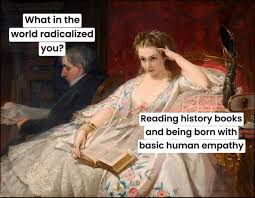
Here’s an article about how to build empathy in adults from the American Psychological Association. It is harder to do once you’re grown, but it’s not impossible. Here’s an explainer on empathy and some exercises you can do to build it as an adult from Calm, the meditation people. There are lots of amazing resources out there about building empathy in children. Children, by the way, are naturally built for empathy. It has to be trained out of them more than trained into them. The best way you can avoid training empathy out of your kids is to model having empathy for them. Fake it until you make it, and your kids will pick that up. Of course, if you think empathy is the woke mind virus and that no one deserves any but you and people just like you, your kids are going to pick that up as well. Here’s an article about how to help kids be more empathetic from PBS, and one from Making Caring Common which is a project out of Harvard, and one from the Big Life Journal (which incidentally I also recommend for kids with ADHD and especially those who are also big feeling kids).
Biblical & Constitutional Strict Constructionism
It’s nonsense. Don’t do it. But here’s some other stuff about it. Consource was the website Josh mentioned in the podcast about primary sources around the drafting of the Constitution. If you’ve never read the Constitution itself (and so many people have not), here’s a link to a full transcription from the National Archives.
Here, also, is a link to the Variety story about Cynthia Erivo playing Jesus in Jesus Christ Superstar at the Hollywood Bowl. I’m totally here for it, and will be contemplating if I can get out to LA this summer. Of course the more obnoxious arms of Jesus’s fanclub are already really pissed about it, but I won’t link any of their stuff because you can go find it on your own if you need anything beyond knowing that a Queer Black woman is not who they want.
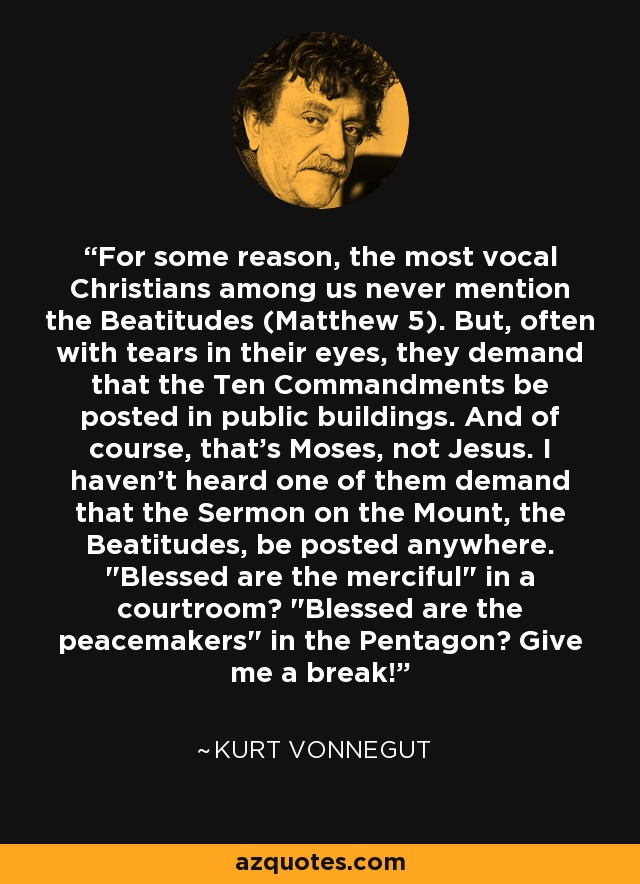
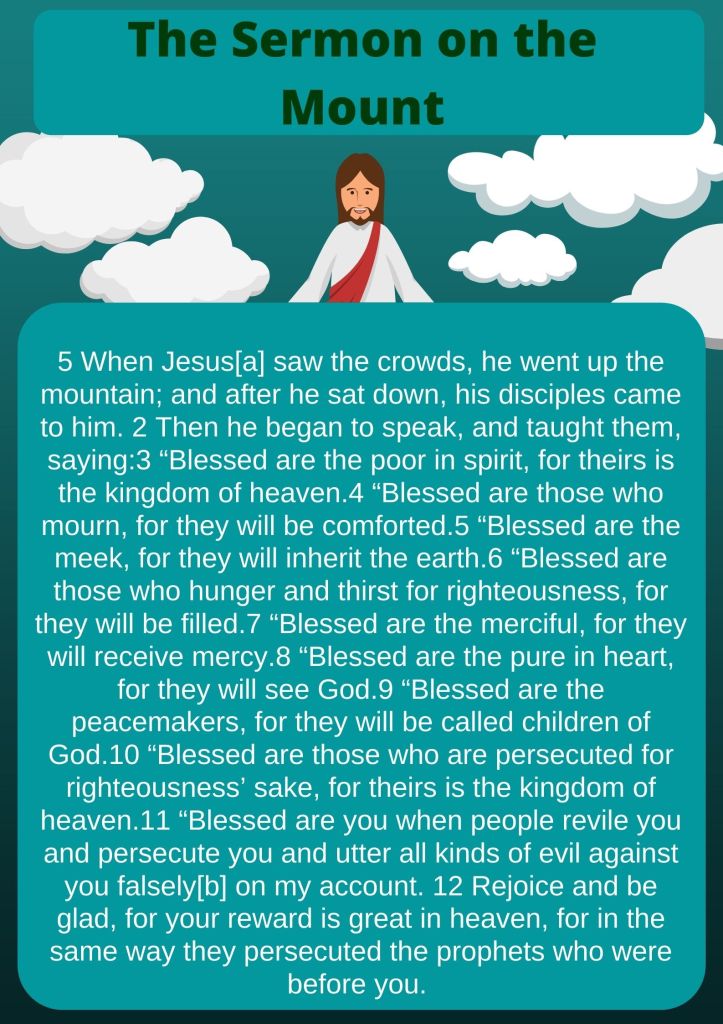
Josh mentioned Kurt Vonnegut’s thoughts on the Sermon on the Mount in public versus the Ten Commandments. So here’s that quote and also the text of the Sermon on the Mount.
Foreign Aid & Demonizing the 1%
We talked about how foreign aid was turned off, and so here’s a couple of explainers about how little of the US budget hat actually is but what it actually does for the world around us. Also, don’t forget foreign aid is power. That’s how you build relationships and power bases without guns. But I digress.
Foreign Aid Data Explainer from Pew Research
What Every American Should Know About Foreign Aid from The Brookings Institute
Now, that we’ve addressed demonizing 1% of the US Budget, we can address demonizing 1% of the US population. Here’s a summary of a research study from the UCLA School of Law’s Williams Institute about how much of the US Population is actually transgender. There’s a lot of really cool data visualizations (did y’all know Josh is trained in how to do that?), and even a map. You can also go here to read a pdf of the actual research paper if you’re like me and need the nitty gritty and the citations. And I couldn’t find reliable data to share about how many people are actually being banned from bathrooms at great expense and also through great prejudice and ridiculousness, I do have an article about how small the number of transgender athletes is (especially since we’re only worried about transwomen competing for the most part). That one’s from Newsweek. I also have one from the Southern Poverty Law Center from all the way back in 2016 about myths about transgender people including that they’re bathroom predators. That’s right. We’ve known that one was a lie for a really really really long time.
Miscellaneous Other Things Mentioned in the Podcast:
We did discuss bird lifespans at one point. Here’s an article about how complicated that question can be from the American Bird Conservancy. But here’s what I’ve discovered. Garden/songbirds can live 2-5 years. Predation is an issue, so the larger you go up the bird scale the longer they are likely to live in the wild. The good news is that I think I heard Lester bang into our bedroom window this morning, so he’s still doing okay with his goofy self. I also saw the first wren return to our holly tree, so spring had better be around the corner.
Josh also mentioned an op-ed he read about language reclamation and stigma from the Western Oregon University student newspaper. You can read that article here. Obviously, language warning. I did the edit the word out of the written transcript from the episode, but you can hear it on the audio. I will say that reclaiming and eliminating stigma from that particular word has been a part of the women’s movement for over thirty years, and it’s never really taken off. For myself, some words just should die out.
 barklife